Careers in the Film Industry: Every Role on Set Explained
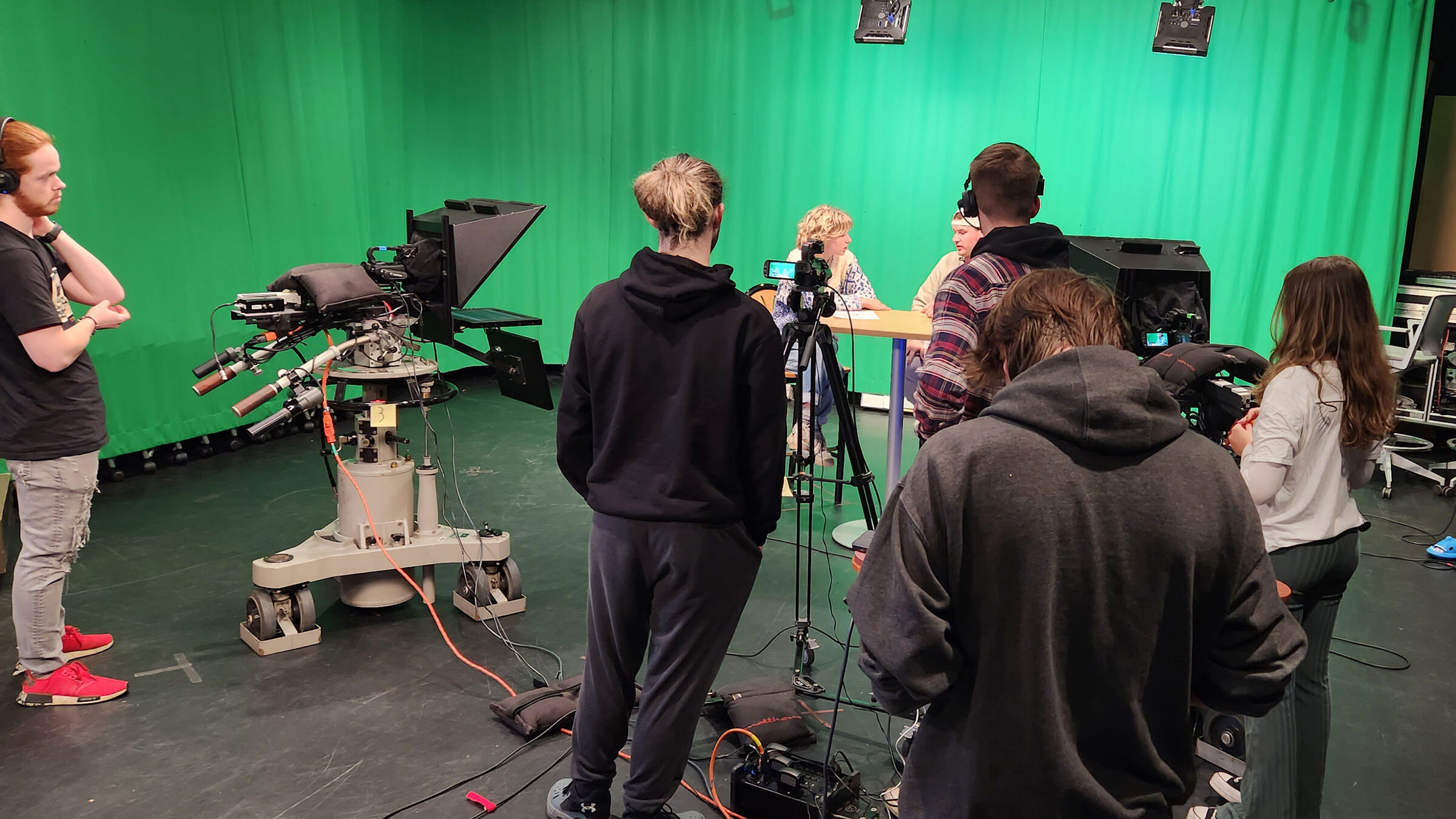
While actors and directors tend to get the most spotlight, it takes a dedicated film crew working tirelessly behind the scenes to keep movie sets running smoothly. The hundreds of names scrolling by in tiny print at the end of a movie are a reminder of just how many careers exist within the industry.
From screenwriters and makeup artists to roles you’ve probably never heard of, like gaffers and grips, this guide breaks down the many crew roles on set. Whether you’re exploring a future in the industry or curious about everything going on as the cameras roll, here’s what you need to know about careers in the film industry.
20 Jobs on a Film Set
How Film Crews are Organized
The film industry divides crew members into two major groups: above the line and below the line crew. It originally referred to the top sheet of a film’s budget, but now usually refers to the creative and organizational role each group plays in film production.
Above the line: The orchestrators and decision-makers. Above-the-line crew members spearhead a film’s creative and artistic vision. These are directors, producers, casting directors, and screenwriters.
Below the line: Professionals who bring the creative vision to life. They’re involved with what can be considered the technical aspects of filmmaking. Cameras, hair and makeup, sound, but also craft services too, which keep the cast and crew’s energy, hydration, and morale high with snacks — can’t make a movie on an empty stomach.
High-school students:
Champlain offers a summer Pre-College Filmmaking Academy, giving you a taste of what your college experience could look like.
Filmmaking AcademyDirector
Directors are responsible for the film’s creative vision and typically the person you hear yell “cut!” at the end of a scene. They’re involved in nearly every aspect of film production, making key decisions about everything from how a scene is lit and how actors deliver their lines to the tiniest details, such as how a pillow is positioned on a couch or the color of a prop in the background. And while they may be the ones who make decisions about these things, they aren’t necessarily the ones who implement those decisions. You’ll hear about those crew members later.
Producer
People often get the roles of directors and producers confused; things get even more confusing when you find out there are directors who are also producers. However, they play different roles: Directors guide artistic direction. Producers focus on the business, including securing financing, hiring crew members, budgeting, managing schedules, and overseeing the film’s creation from start to finish
Casting Director
The casting director is a huge part of the filmmaking process from the very beginning. They’re responsible for finding and assembling the right talent for the right roles. This involves sending out casting calls, organizing auditions, and offering recommendations to the director and producer about which actors best fit their creative vision.
Screenwriter
Every film starts with a screenwriter. They’re responsible for writing the scripts for films, which are known as screenplays. Screenplays serve as the blueprint for a film and contain dialogue, instructions, storyline, and actions for actors. Screenwriters work on original screenplays, written entirely from scratch, and adapted screenplays, which reimagine existing source material, such as a novel, for the screen. It’s no coincidence that the Academy Awards have recognized screenwriting since the very first ceremony. Without the script, there’s nothing to direct, light, or perform.
Camera Department
Director of Photography (Cinematographer)
The director of photography, also known as the cinematographer, is responsible for how a film looks and feels on screen. Working closely with the director, they make key decisions about camera movement, framing, lighting, and camera lens to craft the film’s visual style. They also lead the camera, lighting, and grip departments, managing equipment selection and crew management to ensure every take is shot with both artistic vision and technical precision.
Camera Operator
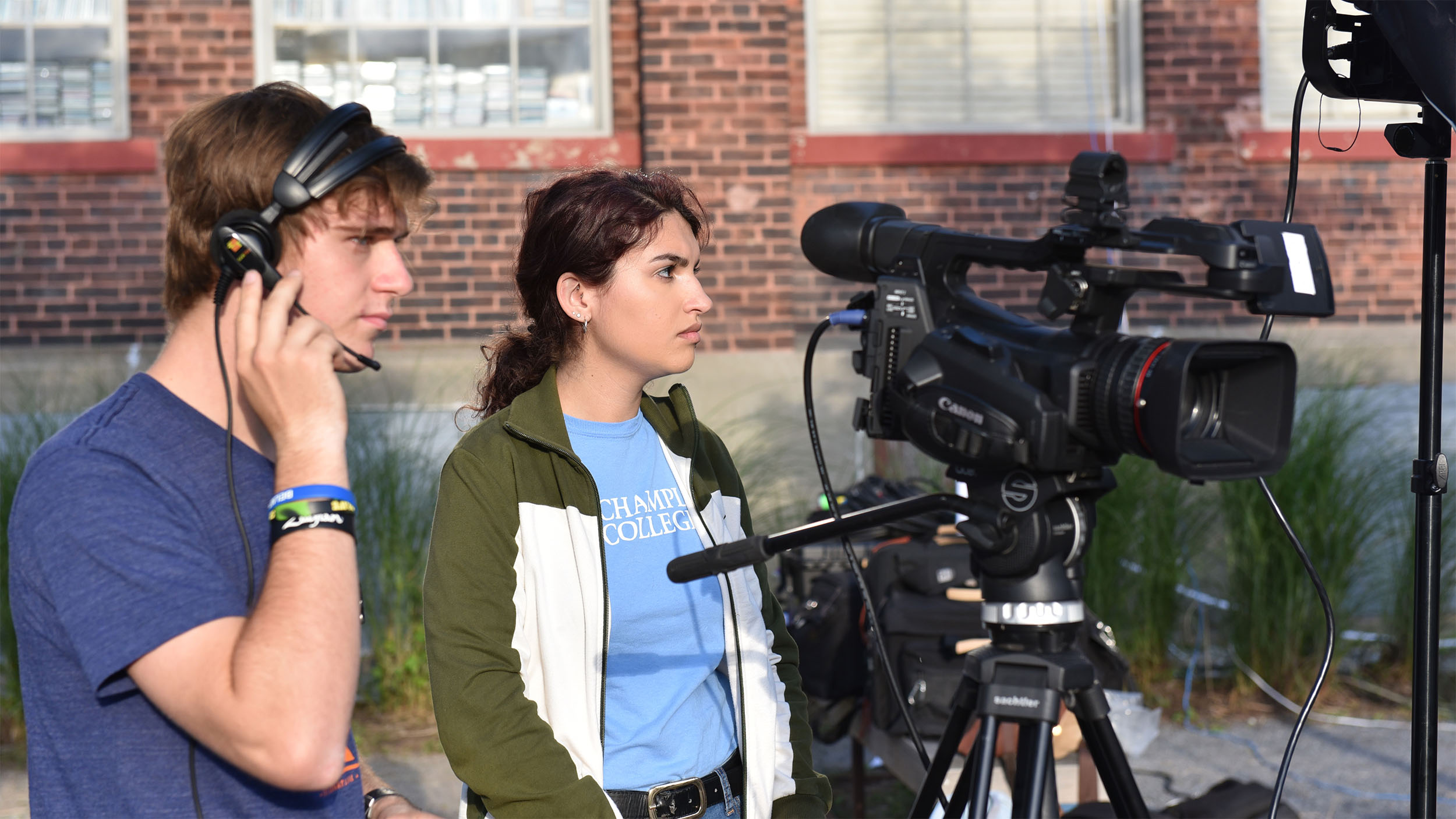
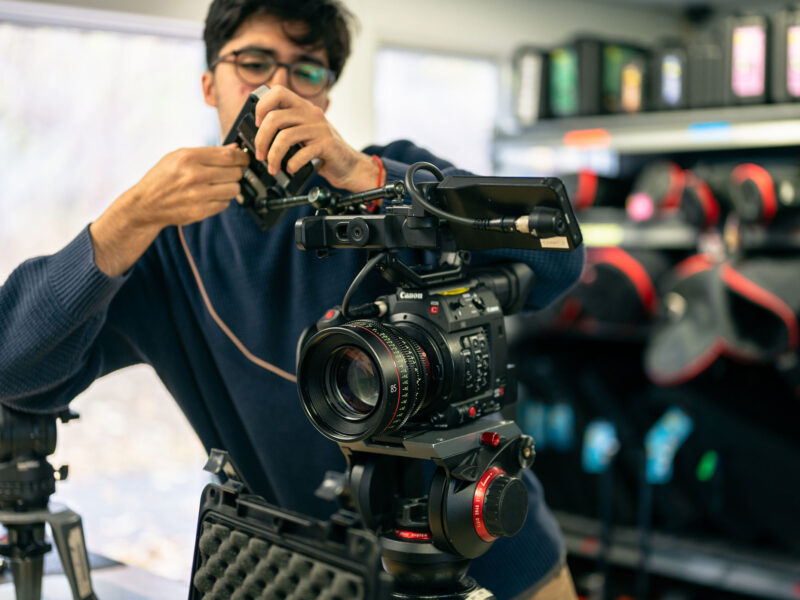
The camera operator works the camera, responsible for capturing everything happening in a scene. Depending on how big the production is, there may be just one camera operator on a set or an entire team of them, each covering different angles to give the director and editor more to work with in post-production. Having multiple cameras on film sets is quite common.
Other crew members in this department include digital image technicians, who work with the cinematographer to manage image quality and color grading, and assistant cameras, who set up, maintain, and operate cameras on set.
Art Department
Production Designer
The production designer translates a film’s vision or idea into a physical set design. Working closely with the director and producer, they define the design style for everything the audience sees on screen: sets, locations, props, graphics, costumes, and lighting. They collaborate with their team to ensure every visual detail is both accurate to the story and compelling on screen.
Art Director
An art director usually works under the production designer, carrying out the production designer’s creative vision and developing the film’s visual style. They oversee the day-to-day operations of scheduling, budgeting, coordinating, and building that help turn the production designer’s idea into reality.
Prop Master
Think of all the props you’ve seen in your favorite film: old, dusty books on a shelf, a half-empty coffee cup on a desk, a pair of glasses with cracked lenses. All these items are the work of a prop master. Short for property master, this is the person who manages the purchase, creation, and handling of all props. They work closely with the director, production designer, art director, and actors to ensure the film’s world feels alive and lived-in.
Other art department crew members include set dressers, who arrange decorations, furniture, and other props on sets, and art production assistants, who support the art director. Other roles include set designers, concept artists, carpenters, painters, and so much more.
Electric Department
Gaffer
The gaffer is the head of the electrical department and the chief electrician, who designs and creates the lighting plan for production. The gaffer works closely with the cinematographer and oversees the placement and operation of all lighting equipment, manages the electrical crew, and makes sure that every scene is lit according to the cinematographer’s specifications.
The gaffer is assisted by the best boy electric, also known as “best electric.” Duties typically include managing the electrical crew’s schedule, coordinating equipment rentals and returns, and tracking equipment. They act as the department’s manager, handling everything behind the scenes so the gaffer can focus on creating the lighting plan.
Grip Department
Key Grip
A key grip heads the team responsible for setting up and maintaining all the equipment and lighting that helps camera operators get the right shot. While the gaffer handles the electrical and lighting side of things, the key grip focuses on the physical support and rigging aspects — camera dollies, cranes, and other equipment that allow the camera to move smoothly and safely during a shot.
The key grip is assisted by the best boy grip, also known as “best grip, who manages crew, equipment, and scheduling for the department. Another role in the grip department is the dolly grip, who operates, sets up, and maintains the wheeled platforms that move cameras smoothly along a track, known as camera dollies. There are also grips, who set up, maintain, and operate non-electrical equipment that supports cameras and lighting on set.
Hair, Makeup, and Costume Department
Makeup Artist
The makeup artist is the lead creative responsible for designing and applying makeup for actors on set, as well as overseeing the overall direction and management of the makeup department. Don’t be fooled, though. This job is a lot harder than it sounds when you consider how the makeup has to withstand the hot lights, location, and filming conditions, and physical movements of the actors.
Hair Stylist
The hairstylist is responsible for creating, styling, and maintaining each character’s hair look throughout the production. They work closely with the director, costume designer, and makeup artist. Similar to a makeup artist, a hairstylist must also consider the specific conditions and physical movements that their hairstyles must withstand.
Special Effects Makeup Artist
The special effects makeup artist transforms an actor’s appearance using techniques like painting and detailing to mimic aging effects, creating and applying prosthetics as small as fake scars to unrecognizable faces, and recreating injuries. Depending on the scene, this makeup can take hours to put on.
Costume Designer
The costume designer leads the wardrobe department and is responsible for creating the film’s costume and wardrobe plan. Working closely with the director, production designer, and other key creatives, they dress each actor to reflect their character’s personality, background, and story. Accountable for everything from accessories and footwear to custom-made clothing, depending on the film, a costume designer may play a huge part in a film’s overall production.
Set Costumer
Perhaps you’ve caught a mistake in a film or two, where in one shot, an actor is wearing an accessory and then it disappears when the camera cuts back to them in the next shot. The set costumer works to prevent this. Their job is to ensure continuity and consistency of the cast’s appearance throughout the production, shot for shot. And because films aren’t always shot in the order in which we watch them, this can sometimes be challenging. That’s when you might catch those small mistakes.
Sound and VFX Department
Sound Mixer
This is the head of the audio department. They are responsible for recording all dialogue and sound during filming, and for capturing high-quality sound effects in real time. For example, the trotting of a horse might be critical to a scene, but difficult to capture on a microphone as the crew is filming. In this instance, the sound mixer might direct their team to record the sound of a horse trotting separately, with the intention of editing it into the scene in post-production. They also oversee the placement and operation of microphones, manage the sound crew, and monitor audio levels.
Boom Operator
An integral member of the production sound team, the boom operator is the person who places or holds a long pole (a boom pole) with a microphone attached to it above the actors’ heads, in order to capture clear dialogue between characters. They follow characters as they move across a set in a scene, and are always conscious of the camera as they prevent the boom mic from appearing in the frame.
Sound Editor
Sound editors select, create, and assemble all audio elements, from dialogue and sound effects to background noises. They work closely with the sound mixer during post-production of a film. Returning to our trotting horse example, the sound editor would be responsible for recording the horse trotting sound and editing it so perfectly into the scene that you’d never know it was a separate track.
VFX artists
Short for visual effects artist, these professionals create or enhance visual elements in the film. VFX are created digitally in post-production after filming is complete, unlike practical effects, which are physical effects created on set during filming — things like pyrotechnics, prosthetics, and mechanical rigs for stunts. Many modern productions use both to achieve the most convincing results. VFX is an entire department in itself, which includes roles such as:
Compositers who combine multiple visual elements — live action footage, digital effects, and background imagery into a single, seamless image.
3D Modelers who build digital versions of characters, creatures, vehicles, environments, and other objects that exist only in a computer.
Animators bring those digital creations to life by giving them movement, personality, and physicality.
Lighting Artists who apply digital lighting to 3D scenes to make them match the look and feel of the live action footage they’ll be combined with.
Simulation Artists who create effects like fire, water, smoke, and explosions that follow the laws of physics in a digital environment.
Frequently Asked Questions
What is the difference between executive producer and producer?
Executive producers and producers pretty much do the same thing, just at different levels. The key difference is that producers are involved in the day-to-day of production, while the executive producer is more of an overseer, involved in the bigger picture decisions around financing, distribution, and overall strategy, rather than daily production. Executive producers also tend to have more industry experience.
How do I start a career in film?
That depends entirely on what you want to do. Are you passionate about cinematography? Do you enjoy capturing shots with a camera? Or maybe you’d prefer the organizational side of production? Figuring out exactly what you like to do within film is step number one. From there, gaining on-set experience, building a portfolio, and networking are key to getting started.
What are some entry-level jobs in the film industry?
Breaking into the film industry typically means starting out at the bottom, but there are plenty of ways to get your foot in the door. Most departments on a film set offer entry-level opportunities, such as assistant, runner, trainee, and intern roles designed to give newcomers hands-on experience while learning the ropes from the pros. The most common position is a production assistant (PA), but you’ll find plenty of runners, trainees, and assistants in departments like electric, makeup, or grip.
Start Your Filmmaking Career at Champlain College
Through Champlain’s filmmaking degree, you’ll get your hands on the industry-standard equipment you just heard about from day one. You’ll build a portfolio, share your films in festivals, and learn the entire production process from writing a script to tracking camera movement. With the support of experienced faculty guiding you every step of the way, you’ll graduate with the practical skills and real-world experience needed to thrive in film, television, and even digital content creation.
Looking for more information about Champlain College? Start here!
Fill out the form to receive helpful information!
Author

More Inside The View
Ideas
From the minds of our students, faculty, and alumni.
News
The latest from Champlain College.
People
Champlain is more than just a place; it's a community.
Places
On campus, in Burlington, and beyond.
Events
Check out our many campus events and get involved! Refine your search by using the filters or monthly view options.